
As of March 2026, the American retail landscape for cannabidiol (CBD) has completely transformed. The era of the ubiquitous, unregulated “smoke shop” CBD has been replaced by sophisticated, specialized brick-and-mortar locations. When a consumer walks into a dedicated CBD store in 2026, they are not just looking for a general wellness product; they are seeking targeted botanical solutions supported by precise biochemical data and pharmaceutical-grade purity standards. The modern CBD store is now a cornerstone of the specialized wellness sector, focusing on consumer education, verified production metrics, and standardized consumption protocols rather than impulse purchases.
Modern CBD products: – https://thcaking.com/products/bulk-thca-smalls
The Shift to Accredited Wellness Centers
By 2026, the consolidation of the cannabis market and enhanced regulatory scrutiny (referencing established 2025 compliance models) have redefined the physical CBD store. These locations no longer function as simple retail outlets; they are viewed as specialized wellness consultations.
A primary differentiator in 2026 is mandatory retail accreditation. Staff members are typically required to hold certifications in cannabinoid science, allowing them to explain complex concepts such as the difference between broad-spectrum (0% THC) and full-spectrum (under 0.3% THC) formulations. This professionalization ensures that when consumers visit a CBD store for specific needs, such as non-intoxicating athletic recovery or localized inflammatory support, they receive protocols tailored to their Endocannabinoid System (ECS), bypassing the self-experimentation common in the early 2020s.
Production Transparency and the Seed-to-Shelf Standard
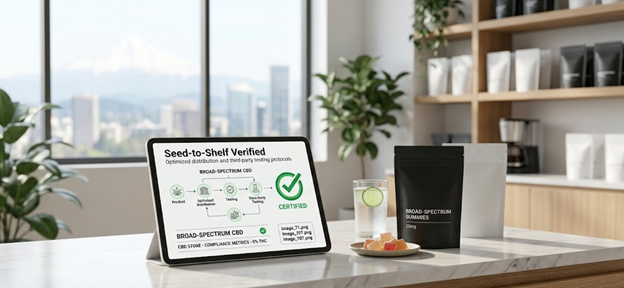
The most critical function of a 2026 CBD store is verifying product integrity. The market now mandates rigorous, comprehensive Certificates of Analysis (COAs) for every product batch. A compliant store must display these results, typically via an unbranded, interactive digital verification system (like the blockchain ledger systems seen in other matrix protocols).
When sourcing products in a 2026 CBD store, the COA must confirm:
- Precise Cannabinoid Homogeneity: Verifying that a 25mg softgel actually contains exactly 25mg of CBD, a consistency requirement established by 2025 manufacturing standards.
- 0% THC Verification: Critical for those in the non-intoxicating space (like users of 98% THCA crystalline for raw wellness), broad-spectrum products must confirm the complete removal of all Delta-9 THC.
- Solvent and Pesticide Clearance: Essential for chemically stable, healthy extraction.
Targeted Formulations: Beyond Tinctures
The product landscape within a 2026 CBD store has evolved from basic oils to sophisticated, optimized delivery mechanisms. While tinctures remain a staple for baseline systemic support, optimized situational use drives the market.
- Optimized Topicals: Advanced stores in 2026 feature topicals, such as relief salves or transdermal patches, that utilize nano-emulsified CBD. This technology (related to the absorption efficiency mentioned in bioavailability protocols) significantly increases localized penetration and speed of onset, offering targeted support for physical discomfort without systemic uptake.
- Functional Ingestibles: The focus has shifted from standard gummies to precisely dosed, fast-acting functional ingestibles (like the 5mg pectin gummies popular for standardized micro-dosing). These are often formulated with other standardized botanicals (such as Linalool for calm) and are designed to provide predictable onset times (under 45 minutes) for specific psychological or physiological needs, rather than a broad, generic effect.
Longevity and Storage Protocols
To maintain the shelf stability and potency validated by the COA, a 2026 CBD store emphasizes correct storage protocols upon purchase. Cannabinoids are molecularly sensitive compounds. Direct UV light is an immediate threat, degrading CBD into inactive molecules and causing significant potency loss. Oxygen exposure leads to oxidation, altering the terpene profile and reducing efficacy.
Modern CBD products are sold in opaque, child-resistant, airtight containers, which must be retained. Stores advise consumers to store these containers in a cool, dark environment—ideally below 70°F (21°C). Many premium formulations in 2026 now incorporate mild refrigeration or climate-controlled shelf systems to ensure the volatile organic compounds remain viable until the moment of consumption, preserving the molecular integrity that defines the modern wellness protocol.

